Showing posts with label About Primary School. Show all posts

Tuesday, September 22, 2020

PSLE Journey for My Children... and Myself

Time flies, my firstborn is taking Primary School Leaving Exam (PSLE) this year! And then my younger child will be sitting for PSLE next year. Yes, I often joke with my friends that I am "sitting" for two PSLE in two consecutive years! 

This is one of our ERP - Examination Resource Packages. Those on the left (assessment books and practice papers) are for the children, those on the right (snacks) are for myself! Just kidding, I share the snacks with them too.


If you ask me how we have been preparing our children for PSLE, I would say that our preparation started way before primary 6. We believe that it is important to develop positive habits and mindset since young, this is not just for PSLE, but for the long run.

1. Sleep and wake up early
Having sufficient rest is important. Our children go to bed latest by 9 p.m. even before they started primary school, so this has become a habit for them to sleep early and wake up early.  Well, I am guilty to say that I can't wake up early on weekend and holiday morning...


2. Balance study time and play time 
Our children enjoy reading and drawing. After school, they will rest a while before studying, and they can enjoy their hobbies when they finish their work. However, we are rather particular about screen time for our children. During school terms, they are allowed to watch certain TV programs, but no mobile games / TV games. They are allowed to play mobile games / TV games only during school holidays. 

3. Make a study plan before major assessment
I print out the monthly calendar for the few weeks leading to the school's major assessment. To encourage them to make good use of the study plan, I print some of their favourite cartoon characters on it. As the children are now older, I would do the planning with them together. It is quite difficult to do a daily plan as we do not know the amount of daily school homework, therefore, we write down the plan for the subjects and topics to revise for each week. There is also a need to have some flexibility to update the study plan from time to time.

4. Sort out the study materials and write notes
Yes, filing is an essential skill! Our children learnt to sort their study materials according to subject, and for each subject, sort the materials according to topics. I also guide my children to write notes for English and Chinese compositions, as well as Science. 

5. Consistency is the key
Revision has been done regularly. When our children have completed learning a topic, they would revise that topic and do practice questions to check understanding.  


While efforts have been made to prepare our children, honestly, as a first-time PSLE parent (excluding the PSLE that I myself took N years ago), my biggest issue is - how do I prepare myself as a PSLE parent?

As a full-time-working-parent, in the midst of busy work schedule, I sometimes doubt whether I have done "enough" to prepare my children for PSLE. And what is "enough" and yet not too much? I don't want to be the "tiger mum" that controls my children's life.

In addition, this year is a special year for everyone due to Covid 19. As the children had a few weeks of home-based learning, I had concern whether this would affect my firstborn's preparation for PSLE. Apart from working from home, I also "work" part-time as their teachers to teach them, because some of their home-based learning lessons were videos, but not live lessons conducted by their teachers where they could ask questions. Honestly, I was not sure whether I had taught them correctly!

Another challenge - many parents with primary school children may agree with me - is to teach primary school Mathematics problematic problem sums without using algebra! Along the way,  I think I have improved in model method to solve Mathematics problems! Other than Mathematics, I think I have re-learnt English, Chinese and Science in the past few years!

I am still learning to manage my own expectation and emotion - keep myself as chilled as possible by the following methods:


At this time of writing this post, my firstborn has already sat for PSLE oral examinations and listening comprehension examinations. I reminded myself not to ask her too much about the exam questions, but rather, ask her for her feeling.

I make encouragement cards for my children for all major assessments, this is my encouragement card for my firstborn for PSLE listening comprehension examination last week - a sweet treat for her with a character that I specially designed for her. 


All the best to all primary 6 children taking PSLE! 


Thank you for visiting PeiPei.HaoHao. If you enjoy reading this post, do stay connected with us on Facebook! 

Tuesday, September 12, 2017

Primary School Mathematics Model Method

The children's primary school mathematics problems are getting more and more problematic. Well, the comprehension of the questions is one challenge to the children. Another challenge is, the primary schools are teaching model method, which to me, is more challenging than using algebra!

Pei Pei once asked me why she had to show the working using model method even though she could solve the problem without the model. I asked her teacher during parent-teacher meeting, and the teacher shared that model method helps the children to make the mathematics problems visible, and the children should learn to use model method as soon as possible, so that they can use this method to solve more difficult questions. 

Now it is Hao Hao's turn to learn the model method. But he finds it difficult to understand what the bars are all about. Therefore, I have to think to ways to help him understand the interpretation of the bars.

Instead of a bar, I used concrete objects to represent. In addition, I learnt from a friend that to help children to grasp the idea of the question, instead of using complicated names, change the questions to name of people whom they can relate to.

Part-whole Concept

Example: Daddy has 3 marbles, Mummy has 2 marbles. How many marbles do they have altogether?

Of course, if you don't have marbles at home, you can use other objects that you can find at home!

Then replace the marbles by blocks. 


After that, use bars to represent. 


Comparison Concept

Example: Daddy has 3 marbles, Mummy has 2 marbles. How many more marbles does Daddy have?

Again, use the real object, followed by blocks, then by bars.


Model method is one of the heuristics to solve mathematics problems. Other heuristics include tabulating, guess and check, working backwards, simplifying a problem, and considering special cases.


Thank you for visiting PeiPei.HaoHao. If you enjoy reading this post, do stay connected with us on Facebook!

Tuesday, January 12, 2016

Primary Mathematics - More Than, Less Than

5 is __ more than 3. Oh, there is a word "more"! So do addition, and the answer is 5 + 3 = 8!  

5 is 2 less than __. Oh, there is a word "less"! So do subtraction, and the answer is 5 - 2 = 3!

Incorrect!!!

Have you ever encounter this problem when your children are doing mathematics questions on "more than" and "less than"?

When I spoke to Pei Pei's Primary 1 form teacher during the parent-teacher meeting a few months ago, I sought her advice on how to teach my children in solving this kind of problem.

The teacher shared with me that using concrete objects e.g. LEGO bricks, rubber bands and so on, to show the children, and to get them to think whether the answer required is bigger or smaller than or as same as the other two numbers in the question. 

After the child grasps the concept using concrete objects, then we can use symbols to reinforce the concept. The teacher shared with me that Primary 1 pupils learn about number bond, which shows the relationship between numbers. So using the concept of whole and parts, the children can see that "parts" are smaller than the "whole", and that the "parts" make up the "whole". 


 For example:


After looking through the school worksheets, I figured out that there are 4 general types of questions:
Type 1: Whole is Part more than Part
Type 2: Part is Part less than Whole.
Type 3: Part more than Part is Whole.
Type 4: Part less than Whole is Part.

Each type has 3 possible questions, for example, for Type 1, the questions can be:
__ is 2 more than 3.
5 is __ more than 3.
5 is 2 more than __.

So it works out to have 12 variations of questions!

Just to share the approach I attempted with my children to guide them in solving e.g. 5 is __ more than 3. 

Question 1: Is this number bigger than or smaller than or as same as 5? Is this number bigger than or smaller than or as same as 3?
[If the children still cannot get the correct answer, use concrete objects to guide them]

Question 2: Can you show me the number bond?
[Guide the children to understand that 5 is "whole", 3 and the answer are "parts"]

Question 3: How do you get the answer?
[Guide the children to consider 5 minus 3 to get 2]


How do you teach your children to solve "more than" and "less than" questions? Please share with us!


Thank you for visiting PeiPei.HaoHao. If you enjoy reading this post, do stay connected with us on Facebook!

Tuesday, October 13, 2015

10 Tips on Preparing Children for Primary One

It has 9+ months since Pei Pei has become a primary school student. I am glad that she has been enjoying her school life, and am thankful that her teachers from her school and student care centre have been very supportive. In Term 3, she was given opportunity to take up leadership role as the class leader. To my surprise, she volunteered herself to take up the role as Chinese class leader, and was elected by her classmates!

Time flies, Hao Hao is also going to primary school in a few months time! After going through the phase of preparing two children for primary school, I had learnt a lot along the way.

1. Handling money 

On Primary One Orientation Day, do let your children to buy food from the canteen, so that you would be able to observe and guide them if they face difficulties.

Starting from the first day of primary one, I give pocket money on a weekly basis. I learnt from a mum blogger from Mum's the Word on using pill boxes for distribution of pocket money, and bought the boxes from Daiso. For money that was not spend would be placed in the saving can.


Don't say I never warn you, the school bookshop can be a dangerous place! The children may be tempted to buy stationery or stickers or other stuffs! Take time to talk to your children about what they want and what they need.


2. Telling time
Buy a watch for your child, and practise telling time. If you ask me, should you buy analogue or digital watch, I would just an analogue one first. Because they learn about telling time from analogue watch / clock in Kindergarden 2 and Primary 1. Here is how our children learn about telling time.


3. Organising and packing 
Since the children were young, they learnt to put their toys and books back to original place. This develops their skills in sorting and organising. 

As the children have English, mother tongue languages and mathematics worksheets from their preschool, get them to learn filing according to subject.

Packing bag is also a skill to be learnt. Instead of throwing everything into the bag, train the children to organise their stuffs in their bags neatly.


4. Taking care of personal belongings
Take note that pasting name labels on the belongings is just a measure for children not to mix up their belongings with others, and for the belongings to be, hopefully, returned to the children if those are lost. Therefore, it is more important to remind the children to take good care of their belongings, for example, check whether they have taken their belongings before they leave a place.


5. Taking down notes
Teachers write instructions on the board, so there is a need to train the children to take down notes. This develops note-taking skill, which is important for their studies.


6. Learning sight words and high frequency words
Knowing sight words and high frequency words promotes the children's reading comprehension. Take a look at our post on how to teach children sight words and high frequency words.


7. Establishing a routine - work first, play later
After shower and dinner, the children are told to complete their homework or study for spelling or 聽寫 first. And they are promised that once the homeworks are completed, they can play! It becomes a habit after a while, and now the children would automatically do their work first, knowing that they can play after that.


8. Sleep early and wake up early
If your child does not have the habit of sleeping early and waking up early, do start training them early!


9. Dressing up... fast
To prevent mad rush in the morning, train your child to dress up fast! Especially if the uniform has buttons!


10. Essential Things to Get for Primary One
Other than school uniform and textbooks, together with the child, get the following items:

  • School bag 
  • Pencil case
  • Wallet 
  • Elastic chain - one side attached to the wallet, the other side clip on to the pocket of shorts or dress / skirt
  • Files - one thin A4 size file to put inside the school bag, and some ring files to keep the materials at home
  • Labels to write name / Customised name labels
  • Small notebook for writing down homework
  • Water bottle
  • School shoes and socks
  • Pencils, erasers, and ruler (we have not bought these yet because they collected a lot from the birthday goodies bags that they received at preschool!)


Thank you for visiting PeiPei.HaoHao. If you enjoy reading this post, do stay connected with us on Facebook!

Monday, October 5, 2015

Primary School English Creative Writing - DIY Story Cubes

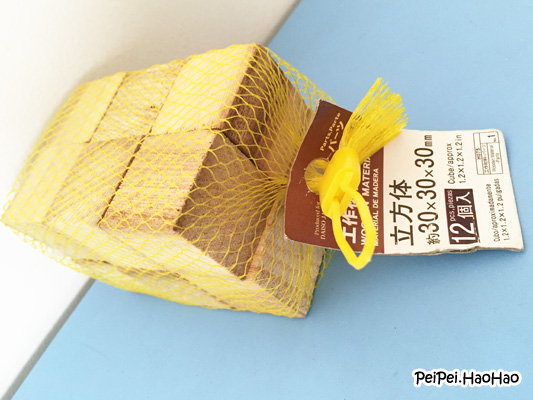
Some of you may have heard of story cubes. However, I find them slightly pricey and the pictures are not very attractive to children. So we made our own story cubes, and guess what, we only spent SGD2 to buy wooden cubes from Daiso!


Materials:
Paper
Blu-tack
Pencil
Ruler
Markers
Scissors
Wooden cubes from Daiso (12 blocks per pack)


Instruction of making Story Cubes:

Step 1:
Think of a theme for each block, for example, weather, people, places, food, etc.

Step 2:
Use pencil and ruler to draw lines on the paper, to mark out the size of one face of the wooden cube.

Step 3:
Draw the pictures on the paper.


Step 4:
Cut the pictures out and paste them on the wooden cube using Blu-tack.

    How to Use Story Cubes in Creative Writing:
    Get the children to throw the cubes, so that there is a combination of themes like weather, people, places. Based on the picture, ask the children to think of a story and write it down.

    Other than developing English creative writing skill, your children can use them for Mother Tongue Languages too!


    This blog post is part of a blog train "Daiso 101" initiated by Mum in the Making


    The next mummy on the blog train is Cherie. She blogs at Cherieladie.com and is a full-time working mum to 2 active boys aged 4 and 2.5. She’s a self-professed Daiso-holic and can never resist the lure of a Daiso shop (who can?). She often lugs huge bags home much to the horror of her husband. Hop over and read about her Daiso hauls – what she buys, what she uses and how she turns some stuff into games for the kids.


    Thank you for visiting PeiPei.HaoHao. If you enjoy reading this post, do stay connected with us on Facebook!

    Monday, August 3, 2015

    Teaching Children High Frequency and Sight Words Playfully

    Learning high frequency and sight words helps to promote reading comprehension. In order to help my children to learn about the words without too much pain (I mean, for myself), I thought of using games to make the process more interesting.

    When we attended Pei Pei's primary school orientation briefing, we received a list of high frequency and sight words. I typed the words using Microsoft Words, printed them out, and then the children helped to cut the print out into small card size, and put each word into a clear card protector.


    Game #1: Snap! 
    I turned the stack of cards upside down, and turned the card up one by one. The children have to read out the word and snap the card. The first person who reads correctly and snaps the card gets to keep the card. The winner is the one with the most number of the card at the end of the game.

    Game #2: Scavenger hunt
    Some cards are placed all over the floor, when I read a word, the children search for the card with that word.

    Game #3: Read and search
    When we read story books, the children look for the cards with words that appear in the book. 


    What activities do you have for teaching children high frequency and sight words?

    Thank you for visiting PeiPei.HaoHao. If you enjoy reading this post, do stay connected with us on Facebook!

    Tuesday, April 14, 2015

    Telling Time for Children

    One of the essential skills for primary school children is to tell time. While teaching the children about "o'clock" and "half past" was very easy, I had some difficulties in teaching them how to tell the minutes. 

    Some time ago, I saw this printable learning clock with small divisions. The paper hour hand and minutes hand were too flimsy, so I used cardboard. 


    For the start, I taught the children multiples of 5. Searching through my craft box, I found a bag of embellishment that was useful for the children to count groups of 5.
       

    With the paper clock, there are two activities that we can do:
    1. Position the hands of the clock and ask the children to tell the time
    2. Tell the children the time and they position the hands of the clock

    Of course, practice makes perfect. We have a clock on the wall of our living room, and the children have their watches, we keep asking them, "What is the time now?" 

    We are still in the process of learning to tell time in minute e.g. 3.11. What suggestions do you have in teaching children how to tell time? Do share with us!


    Thank you for visiting PeiPei.HaoHao. If you enjoy reading this post, do stay connected with us on Facebook!

    Tuesday, January 13, 2015

    Surviving the First Two Days of Primary School for the Mum

    On 1 January 2015 (Thursday), I suffered from insomnia. Because Pei Pei would be going to Primary School on the next day! I thought I was more excited than Pei Pei, who was already sound asleep at 9+ p.m.

    School bag, checked. School uniform, checked. Socks and shoes, checked. Story book for silent reading, checked. Pencil box, checked. Tissue paper (not for me to dry my tears), checked.

    But somehow, I felt that I missed something. What did I miss?

    At 3 a.m., I jumped out of the bed. Because I finally realised what I missed - pocket money! And yes, this was my first time giving out pocket money to my child. 

    Together with DaDi, we attended the first day of school together with Pei Pei. We had some bonding activities organised by the school. After that, we followed her to the student care centre, she stayed there for a few hours to get familiarised with the environment and routine.

    On 4 January 2015 (Sunday), I suffered from insomnia again! Because Pei Pei would be in school all by herself on the next day! 

    I was super worried, and kept thinking...
    1. Does she know where the morning assembly area is?
    2. Does she know where the toilets are?
    3. Would she get lost in school?
    4. Would she lose her belongings?
    5. Would she spend all her pocket money on the sweet drink at the canteen?
    6. Does she know how to count money and get the change when she buys things?
    7. Are the buns or sandwiches that I prepared enough for her during recess?
    8. Does she know the location where the student care centre student fetches her after school hours?
    9. Do her classmates' mummies make bento / lunch boxes for them? Would she be upset that I only made sandwiches for her? (I can't wake up at 5 a.m. to cook!)
    10. Would she be bullied by the other children in the school?

    At the school gate, I attempted gate crashing, but it failed, as I was stopped by the security guard. I reminded Pei Pei, "If you don't know where the assembly area is, ask!"

    I was thankful that a school staff happened to walk past us, and offered to guide her to the assembly area. The nervous me stood outside the gate, kept looking at her. The security guard smiled and said, "Don't worry. He is the Vice-principal!"

    At school dismissal time, I was having a meeting at work. I kept worrying about whether she reached the student care centre safely. As I was about to walk out of the meeting room to make a call to the student centre, DaDi had already called and reported that Pei Pei landed safely!

    When I fetched her from student care centre after work, she was very happy and kept telling me what happened in school. I felt so relieved that everything went smoothly. All my worries seemed to be unnecessary!

    I survived the first two Primary School days! Finally I had a good night sleep!


    Thank you for visiting PeiPei.HaoHao. If you enjoy reading this post, do stay connected with us on Facebook!
    Thursday, November 27, 2014

    Letter to My Primary-One-to-be Child

    Dear Pei Pei,

    During your Primary One Orientation, you waved bye-bye to me, and followed your teachers and classmates to the classroom for some bonding activities. I was sitting at the last row in the hall, waving hard to you. I was the one who suffered from separation anxiety. The Principal and teachers were sharing a lot of information about the school, but in my mind, I kept thinking about what you were doing, whether you like the teachers and classmates. And whether you know the way to toilet and not to get lost in the school.

    On the same day, it was also your preschool graduation day. You were the first person who delivered the graduation speech. 3 seconds into your speech, I found the taps of my eyes turn on uncontrollably. I was just a bit emotional. I finally accept the fact that you are going to be a Primary One pupil in 1+ month time! It is going to be your new milestone, and it is also a new milestone in my parenting journey.

    I am thankful that you have been studying for your spelling and 聽寫 diligently. When we bought your Primary 1 textbooks (with damage of $100+), you start reading the books without us telling you to do so. This is the kind of effort and passion in learning that I hope you continue to have. I don't expect you to score full marks, it is ok to make mistakes, and learn from mistakes. MaMi is happy as long as you are willing to put in effort. 

    Many friends asked me why we did not ballot for you to the well-known primary school nearby. There were many considerations (read this post to find out). And now, I am clear of the reason, not just because we were afraid that there would be no more vacancy in other nearby schools if we were not successful in the lucky draw balloting. What is the purpose of primary school education? To achieve high score for PSLE? No. I just wish that you will become an active and independent learner, and most importantly, I wish that you grow up to be a person of good character with positive values. I have met youngsters who excel in their studies, however, they don't even know how to say "Please" or "Thank you".

    If you face difficulties in your studies, let MaMi know, ok? Oh, I don't mean I am going to do your homework for you. I hope to be able to stimulate your critical thinking and problem solving skills, and to inspire you to love learning. Yes, that's why I said that it is also a new milestone in my parenting journey, since I have so many things to learn too!

    Other than academic studies, I hope that you will find passion in other activities that you enjoy, be it sports, performing arts or others. Study hard, but don't forget to play hard too!

    As you are growing, you will find that friendship become an important part of your life. Do get to know more friends, but do stay away from those who hurt you.

    Please remind me to read this letter, if one day, I say something like "Why you score only 90% for this test?"

    Let's learn and grow together, my dear.

    Love,
    MaMi

    Thank you for visiting PeiPei.HaoHao. If you enjoy reading this post, do stay connected with us on Facebook!

    Tuesday, November 18, 2014

    Choosing Student Care Centre

    Registration to Primary School, done.

    That is not the end of the story.

    As we are full-time-working parents without helper, and we do not want to trouble our parents, one big challenge we face is to look for student care service for our children after school hours.

    Initially, one of the factors for the choice of primary school was the availability of school-based student care centre. However, after speaking to a supervisor of one of the school-based centres, I realise that it is not on first-come-first-serve basis. Students from low income families or with challenging family situations would have the priority. In addition, the centre can inform the applicants whether the application is successful only by late November. So if our application is not successful, then it would be too late to look for another student care centre, since the few centres near our place may not have any more vacancies.

    So we decided to look for student care centres outside the school. Now then I know that there are centres that are community-based, operated by Voluntary Welfare Organisations (VWO). I was thankful to find one near the school our child is going to attend. 

    Though the fee it charges is higher than the school-based one, the whole centre is air-conditioned, and has bathroom facilities. Being operated by VWO, the students may get to go on outings with organisations that offer community involvement service.

    We brought Pei Pei there recently, it seems that she enjoyed her interaction with the teachers and potential classmates. 

    Factors for the choice of student care centre for our children:

    Proximity from school
    Note that the centre may not offer to fetch the child from the school if the school is too far from the centre. Then the parents would have to arrange school bus.

    Teachers
    Loving and caring teachers are the pillars to a good school / student care centre. 

    Environment
    Since the children would be doing their school homework there, the classrooms must be bright enough. It is also preferable to have shower facilities, so that the children can freshen up after hours of lessons in school, especially if there is physical education lesson in the morning. 

    School Fee
    Our wallets are "private limited", not able to afford school fee that is too high.


    If you are sending your children to student care centre, what are the factors that affect your choice?

    Thank you for visiting PeiPei.HaoHao. If you enjoy reading this post, do stay connected with us on Facebook!

    Wednesday, July 23, 2014

    Primary School Registration

    After reading and hearing so much ravings about primary one registration, we are finally part of registration process this year. It is going to be a new milestone for Pei Pei, and it is also a new milestone for us as parents.

    DaDi's primary school is closed down while mine is a distance away from our place. As a full-time-working-mum, I treasure the weekend time with family so I didn't sign up as parent volunteers (ok I admit that I am actually lazy). We do not have any form of affiliation with the primary schools. So we can only register in Phase 2C. (What is "Phase this and that"? Please refer to Ministry of Education's website.)

    Initially, we hoped to register our children with the primary school that is a stone throw away (School A). There is a covered walkway that links our block to the school's back gate. This saves time and expense on travelling. Distance is one of the factors in our consideration. Oh, we didn't buy the house because of that school, I wasn't even aware that there was a school nearby when we bought this house! 

    But well, so close yet so far.

    School A is a very popular school. Even parent volunteers / active community leaders have to ballot  during Phase 2B. So our chance to get a place in Phase 2C is very slim. Friends who know me for a long time would know that I don't have luck in lucky draws.

    Of course, you may say, just give it a try. But the problem is, if we don't get balloted, by Phase 2C Supplementary, the next school that is close to our place (School B) may not have a vacancy! Then we have to travel further!

    Other than distance, another consideration is the availability of student care centre in the school or near the school. This is essential for us as we are working, and we don't have any help to look after the children after school. I went to visit the student care centre at School B, the supervisor informed me that the priority is given to low income families and those families that are facing difficulties (e.g. single-parent families). Then I went to visit the student care centre just next to School B, it is on first-come-first-serve basis. 

    Another consideration in choosing the primary school for my children is, whether the school suits them. As we hope both children study in the same school for convenience sake, we have to consider both of their personalities and interests, though we are registering for the elder one now. I just hope that through primary school education, my children will become confident individuals with good character and have a love for learning.

    While I was very tempted to give it a try to ballot for School A, to get an experience of heart attack during the balloting process and hopefully miracle happens, recently the temptation was reduced after I read some parent forum. Ok, again I am too lazy, as some parents would have read the forum at least one year before registration. Parents from School A discuss things like PSLE results, tuition centres and enrichment classes, comparison between results of different classes, and some parents even expressed that they were worried as a teacher was new and "could not produce results". On the other hand, parents from School B mainly share information about administrative matters, and some share that the principal is very nice.

    So it seems that for School A, though it is just a stone throw away, we may have to give it a miss.

    What are your considerations in choosing primary school for your children?


    Thank you for visiting PeiPei.HaoHao. If you enjoy reading this post, do stay connected with us on Facebook!

    Monday, May 5, 2014

    Preparing for Primary One: Handling / Counting Money

    When I heard about the dates for Primary One registration, my first thought was: where is my baby? My firstborn was just a baby not too long ago, and now she is going to be a Primary school student next year! I couldn't believe it! 

    After calming down, my next thought was, have we prepared her for this transition? No, no, I don't mean preparing her to do algebra or Newton's Laws of Motion or writing a composition. I am more concerned about essential skills like handling money, reading time, taking down notes. etc.

    In this post, I shall share with you how I taught my children how to handle money, and some challenges I faced.

    Activity #1. Identifying the denomination of coins and notes

    My first challenge: there was a new series of coins which was rolled out last year, the old series and new series have a slight difference in terms of size (I myself had mixed up new 50 cents coin with old 20 cents coin!), so I had to search and collect the two series of coins to carry out this activity.

    I taught them to differentiate the coins not only by looking at the sizes, but also to look at the denomination printed on the coin.


    Activity #2. Pretend Play

    We set up our canteen. Oh well, our canteen for that day sold vegetarian food only. 


    In this activity, they learnt about reading price tags, and used the real money to pay. Oh, just notice Hao Hao can count money with his speedy shadow-less hand!

    My second challenge: it took me a while to teach them the combination of coins. For example, to pay for something that costs 30 cents, it could be three 10 cents, or one 10 cents plus one 20 cents. 

    We started the pretend play with goods ranging from 10 cents to 1 dollar. It was my mistake to be so ambitious. So I reduced the range of prices, and progressively increased the range of prices in the next few pretend play sessions.

    My third challenge: 10 cents in Chinese is "一(one)毛". I think I may have caused some confusion by using English and Chinese at the same time. I could have taught them one language, make them familiar first before I use another language.


    Activity #3. Real-life application

    When we go for shopping, we make effort to teach them to read the price tags. We also hand them some coins to make payment themselves.


    I am still working on how to teach calculation of the change. If you have any tips, please share with me ok?

    This is our first part of "Preparing for Primary One" series, stay tuned for more sharings!


    Thank you for visiting PeiPei.HaoHao. If you enjoy reading this post, do stay connected with us on Facebook!